Level One Autism: What It Means, Signs, and How It’s Supported
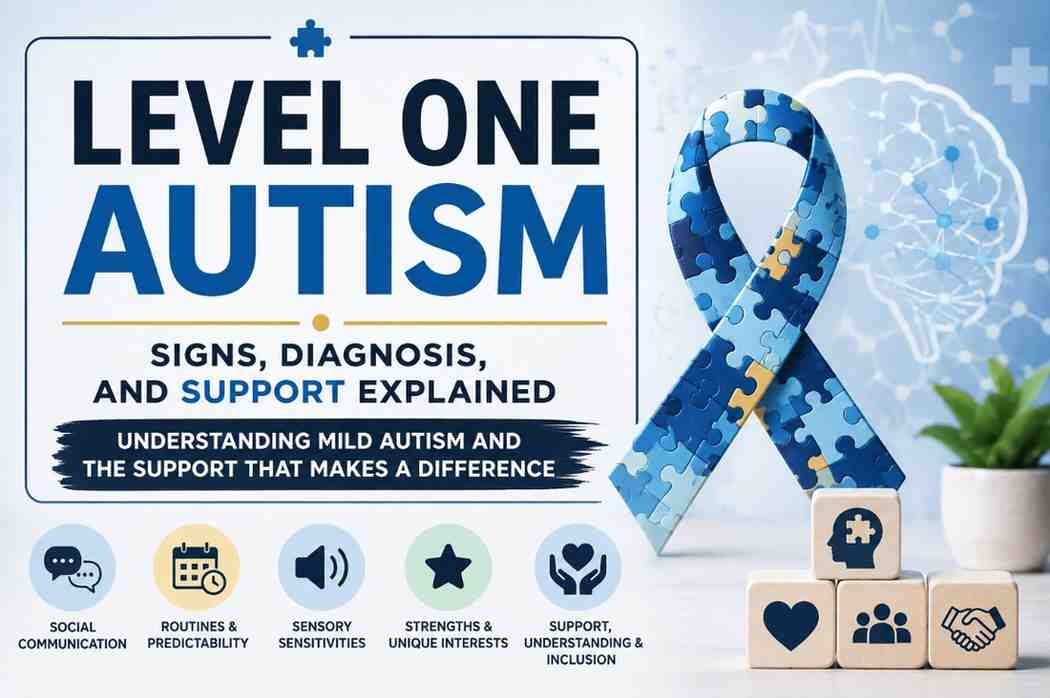
Level one autism is the mildest of the three severity levels used in an autism spectrum disorder diagnosis. It describes people who need some support with social communication and flexibility, but who can often speak in full sentences, hold conversations, and manage daily routines with a manageable amount of outside help. Many people know this presentation by an older, now-retired term: Asperger’s syndrome.
Understanding level one autism matters because the label shapes how families, schools, employers, and clinicians think about the support a person actually needs. It is not a measure of intelligence, personality, or worth. It is simply a clinical shorthand that describes how much assistance someone requires with two specific areas of functioning at a given point in time.
This guide walks through what level one autism looks like in children and adults, how it is diagnosed, how it differs from level two and level three autism, and what kinds of support genuinely help.
What Is Level One Autism?
The current diagnostic manual used by clinicians in the United States, the DSM-5, replaced the older separate diagnoses of Asperger’s syndrome, autistic disorder, and pervasive developmental disorder not otherwise specified with a single category: autism spectrum disorder. Within that category, clinicians assign a severity level from one to three based on how much support a person needs in two domains, social communication and restricted or repetitive behaviors.
Level one is officially described as “requiring support.” A person can be rated level one in one domain and level two in the other, since the two areas are scored separately. This is more common than most people realize, and it means two people with a level one diagnosis can look quite different from each other day to day.
In practical terms, someone with level one autism can usually communicate verbally, may have strong interests or areas of expertise, and can often navigate daily life independently in many respects. Social situations, unstructured environments, and unexpected changes tend to be the areas where support is most needed.
Level One Autism Symptoms and Signs
No two autistic people present identically, but there are patterns clinicians and researchers commonly observe in level one autism.
Social communication differences
- Difficulty starting or maintaining back-and-forth conversation
- Trouble reading facial expressions, tone of voice, or body language
- Literal interpretation of language, including struggles with sarcasm or idioms
- Discomfort with small talk or unstructured social settings
- A tendency to talk at length about a preferred topic without noticing the listener’s interest
Restricted and repetitive patterns
- Strong preference for routines, and distress when those routines shift unexpectedly
- Intense, focused interests that may become a source of deep knowledge or skill
- Sensory sensitivities to sound, light, texture, or smell
- Repetitive movements or habits, sometimes described as stimming, which can include hand movements, rocking, or fidgeting
Because these traits are often subtler than what is seen in level two or level three autism, level one autism symptoms can be missed for years, particularly in people who learn to mask or camouflage their differences in front of others.
Level One Autism in Children
In children, level one autism symptoms often become noticeable once social expectations increase, typically around preschool or early elementary school. A child might play well independently but struggle to join group games, prefer to discuss one topic repeatedly, or become distressed when a familiar schedule changes without warning.
Teachers sometimes describe these children as quiet, exceptionally focused, or “a bit different socially” rather than immediately recognizing autism. Because level one presentations can look like shyness, giftedness, or simple personality quirks, many children are not evaluated until a parent, teacher, or pediatrician notices a broader pattern of differences.
Early identification still matters, even at level one. Support during the school years, such as social skills instruction, occupational therapy for sensory needs, and accommodations in the classroom, can make a meaningful difference in how a child navigates friendships and academic demands.
Level One Autism in Adults
Level one autism in adults often carries a different story. Many autistic adults living with level one traits were never diagnosed as children, either because diagnostic awareness was more limited at the time or because they learned to compensate socially in ways that hid their difficulties from others.
Common experiences reported by autistic adults include workplace challenges around unwritten social rules, exhaustion from masking their natural communication style, difficulty with small talk in professional settings, and a strong need for predictability at home after a demanding day. Many describe finally understanding years of social friction only after receiving a diagnosis in adulthood.
Level one autism in adult women in particular tends to be underrecognized. Research and clinical observation suggest that autistic girls and women are more likely to mask their traits, mimic peers, and develop coping strategies that make their differences less visible to others, which can delay diagnosis well into adulthood.
Adult diagnosis is not just a label. For many, it opens the door to targeted therapy, workplace accommodations, and a clearer framework for understanding lifelong patterns that previously seemed confusing or isolating.
How Level One Autism Is Diagnosed
There is no blood test or brain scan that confirms autism. Diagnosis relies on a comprehensive evaluation by a qualified clinician, typically a developmental pediatrician, psychologist, psychiatrist, or a multidisciplinary team.
A thorough evaluation usually includes:
- A detailed developmental history, often gathered from parents for children or through self-report and, when possible, input from family members for adults
- Direct observation and structured interaction, frequently using standardized tools such as the Autism Diagnostic Observation Schedule
- Assessment of communication style, social reciprocity, sensory responses, and repetitive behaviors
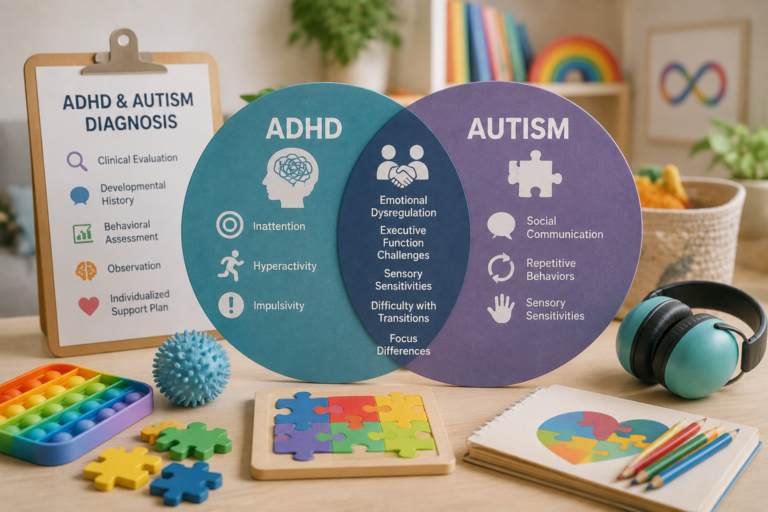
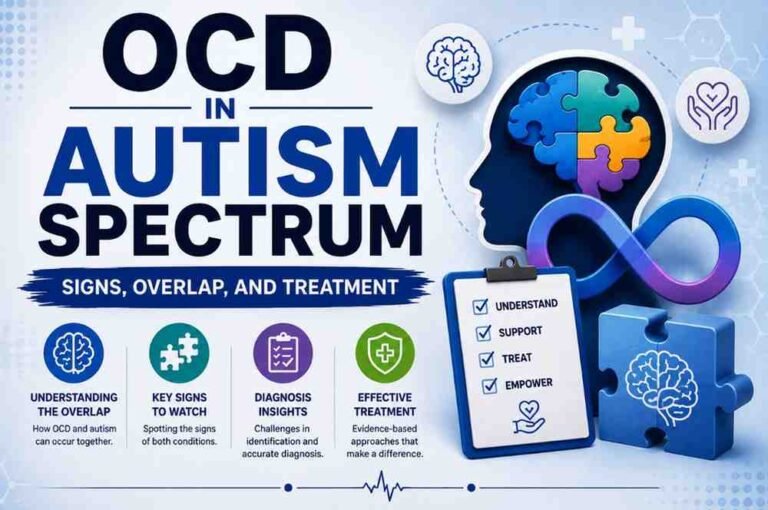
- Ruling out or identifying overlapping conditions, since anxiety, ADHD, and learning differences frequently co-occur with autism
Because level one traits are subtler, an accurate diagnosis often benefits from a clinician who has specific experience assessing milder presentations of autism spectrum disorder, particularly in adults and in women, where symptoms are more easily masked or misattributed to anxiety or social awkwardness.
Level One vs Level Two Autism
The core difference between the levels comes down to support intensity, not the presence or absence of traits. A person with level one autism typically communicates in full sentences and can function independently in many settings, needing support mainly around social nuance and flexibility.
By comparison, someone with level 2 autism generally shows more noticeable differences in verbal and nonverbal communication, along with repetitive behaviors that are more obvious to an outside observer and interfere more consistently with daily functioning. Support needs at level two are described as substantial rather than simply present.
It is also worth understanding how these presentations compare with the far end of the spectrum. Someone diagnosed with level 3 autism requires very substantial support, often including significant help with verbal communication and daily self-care, since social and behavioral challenges are severe enough to affect nearly every part of daily life.
These levels are not fixed for life. A person’s assessed level can change over time as skills develop, as circumstances shift, or as support needs increase during periods of stress, making the label a snapshot rather than a permanent prediction.
Support and Treatment Options
There is no single treatment that applies to everyone with level one autism, and support should be tailored to the individual rather than applied as a blanket protocol. Common, evidence-informed approaches include:
- Speech and language therapy, which can help with conversational pragmatics rather than basic speech production, since most people with level one autism already speak fluently
- Occupational therapy, useful for sensory regulation and daily living skills
- Social skills training or coaching, often delivered in small groups or one-on-one settings
- Cognitive behavioral therapy, particularly helpful for the anxiety that frequently accompanies autism
- School or workplace accommodations, such as flexible deadlines, quiet workspaces, or advance notice of schedule changes
Family education also plays a significant role. Parents, partners, and close friends who understand how level one autism affects communication and flexibility are often better equipped to offer support that actually helps, rather than support that feels overbearing or mismatched to the person’s real needs.
Is Level One Autism the Same as Asperger’s Syndrome?
Many of the traits once described as Asperger’s syndrome now fall under level one autism. The DSM-5, published in 2013, folded Asperger’s syndrome into the broader autism spectrum disorder category rather than keeping it as a separate diagnosis. People who were diagnosed with Asperger’s before that change often continue to identify with the term, and it remains widely used in everyday conversation, even though it is no longer a formal clinical diagnosis in the United States.
Frequently Asked Questions
What does level one autism mean?
Level one autism means a person meets the criteria for autism spectrum disorder and needs some support with social communication, flexibility, or both, while generally functioning independently in most areas of daily life.
Can someone with level one autism live independently?
Many people with level one autism live independently, hold jobs, and maintain relationships, though they may still benefit from support around social situations, sensory needs, or coping with unexpected change.
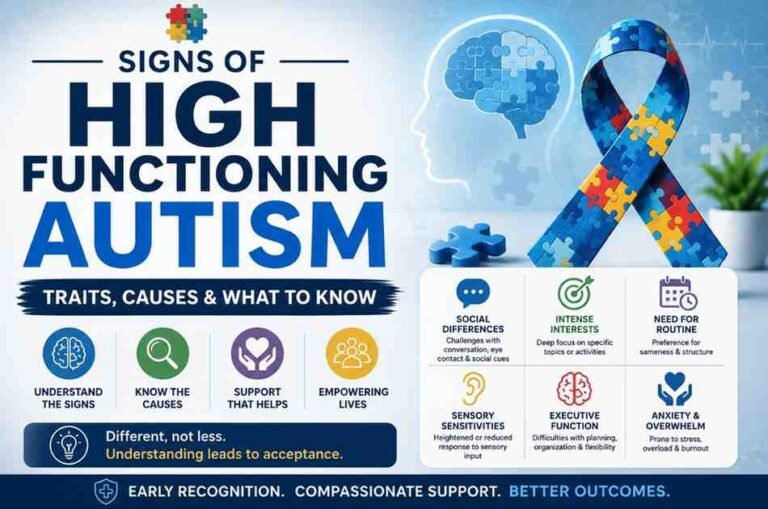
Is level one autism considered high functioning autism?
Level one is often described informally as high functioning autism, though many clinicians and autistic self-advocates caution against that term since it can understate real struggles with anxiety, sensory overload, or social exhaustion that are not always visible to others.
How is level one autism different from level two autism?
The main difference is the intensity of support needed. Level one involves noticeable but manageable challenges, while level two involves more pronounced communication differences and repetitive behaviors that require more consistent, structured support.
Can level one autism be diagnosed in adulthood?
Yes. Many adults, especially women, are diagnosed later in life after years of masking their traits or attributing their experiences to anxiety, shyness, or other conditions. A comprehensive evaluation by an experienced clinician can confirm a diagnosis at any age.
Conclusion
Level one autism describes a real and often underrecognized set of experiences, not a mild inconvenience or a personality quirk. People with this presentation can communicate verbally and manage much of daily life independently, yet they may still face genuine challenges with social nuance, sensory sensitivity, and flexibility that deserve to be understood and supported rather than dismissed. Whether the diagnosis comes in early childhood or later in adulthood, the right combination of understanding, accommodation, and targeted therapy can help someone with level one autism build on their strengths while getting support in the areas that are genuinely difficult.
This article is for general educational purposes and is not a substitute for a professional evaluation. Anyone concerned about autism traits in themselves or a loved one should speak with a qualified healthcare provider.