What Parallel Play Means for Autistic Kids
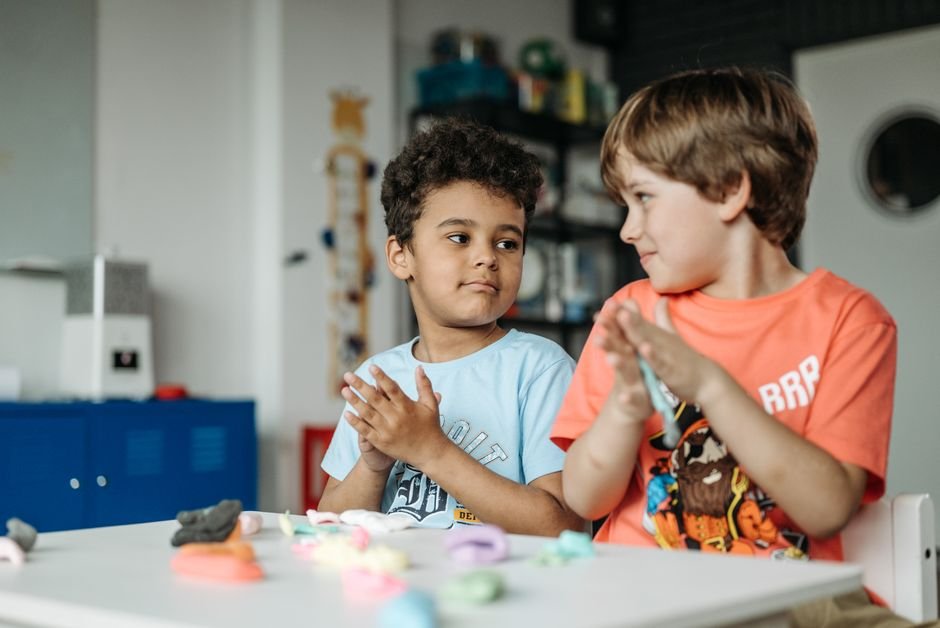
Parallel play is when two children play near each other, using similar toys or sharing a space, without a shared game or back-and-forth exchange. For many autistic kids, this isn’t a phase to outgrow. It’s often simply how connection starts, and for some, how it stays.
What it looks like day to day
Picture two kids at a sandbox. One is building a tower, the other is running a toy truck along the edge a few feet away. Neither asks the other to join in, but both keep glancing over, adjusting what they’re doing, occasionally handing over a shovel without a word exchanged. That quiet awareness of another person, without the work of coordinating a shared activity, is parallel play.
It shows up with siblings watching the same show from opposite ends of a couch, or two kids at story time sitting close together, each absorbed in a different book. None of this means a child is uninterested in other people. It often means the opposite: the presence of someone else is comfortable enough to relax into.
Why it counts as social connection
A lot of parenting advice treats parallel play as a stepping stone to “real” play, with cooperative, turn-taking games as the assumed goal. For autistic children, that framing can do more harm than good. Pushing a child toward constant interactive play when parallel play is what feels comfortable can turn playtime into something to get through rather than enjoy. Autistic play can look different in a lot of ways, and this is one of the more common ones.
Parallel play isn’t a lesser version of friendship. It’s a real form of it, and for some autistic kids and adults, it remains a preferred way to spend time with people well into adulthood — sitting in the same room doing separate things, together.
What helps, without pushing
If you want to support a child who plays this way, resist the urge to narrate or redirect every few minutes with prompts like “why don’t you ask her what she’s building?” Let the proximity do its own work. Toys that hold up well without a shared script tend to fit best here — genuinely accessible toys built for independent, sensory-friendly play are worth seeking out over ones that demand a partner to work.
If a teacher or a specialist raises concerns about a child “not engaging” with peers, it’s worth asking what engagement is being measured against. A child parallel-playing contentedly for twenty minutes next to a friend is engaged, just not in the format a checklist expects. The American Academy of Pediatrics’s autism resource hub is a reasonable place to compare typical play development if you want more context.
Watch what your child seeks out rather than what a milestone chart says they should be doing. If they gravitate toward playing near people instead of away from them, the connection is already happening.