How Autistic Play Can Look Different, and Why That’s Okay
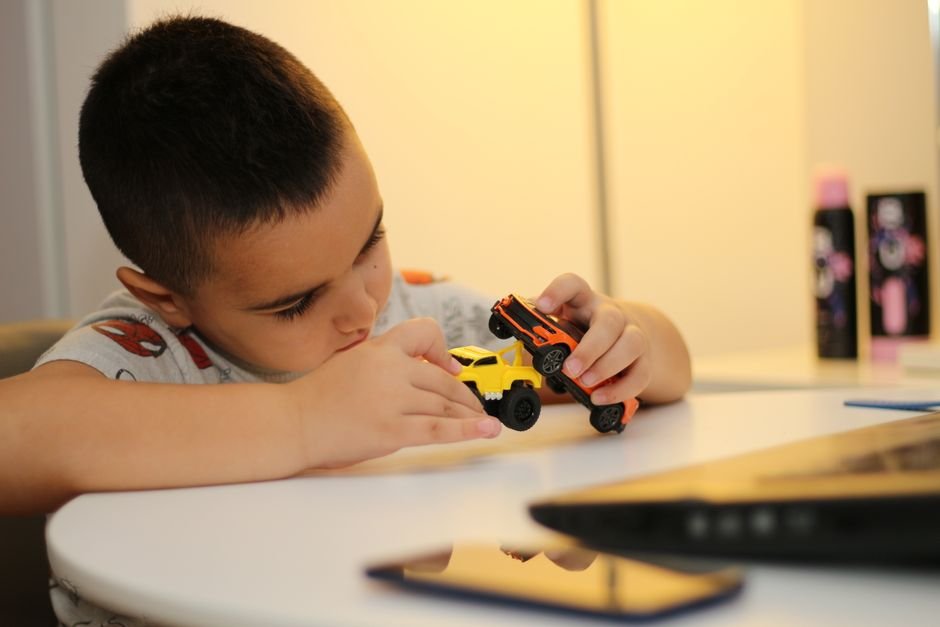
Autistic play differences show up early and often get mistaken for a lack of imagination — a child lining up cars by color instead of crashing them together, or replaying the same three minutes of a favorite show with toy figures, over and over. That’s still play. It’s just organized around pattern and repetition instead of pretend narrative.
Traditional descriptions of pretend play as a developmental milestone, including from sources like the CDC, were built around one style of play, and autistic children who play differently sometimes get flagged as behind rather than simply different.
Repetition and sorting are forms of engagement, not the absence of it
Lining up objects, sorting by size or color, or repeating a favorite sequence the same way each time can look like the opposite of imaginative play. For many autistic children, this kind of play is deeply engaging — it offers predictability and a chance to notice detail that faster-moving pretend play doesn’t allow. This isn’t unlike stimming, where the repetition itself is often the point rather than a problem to solve. Interrupting it to redirect toward “more typical” play often ends the engagement rather than expanding it. Sorting by color or size, in particular, is often mistaken for a lack of creativity when it’s closer to the opposite — noticing fine distinctions that faster, more chaotic play would blur past entirely.
Scripted or repeated scenes still count as pretend play
Re-enacting the same scene from a movie, sometimes with the same lines every time, is a recognizable form of pretend play — it’s just anchored to a known script instead of invented on the spot. Over time, many children start varying the details on their own, but that shift happens at its own pace and doesn’t need to be pushed. Playing alongside another child rather than directly with them — each doing a separate activity in the same space — is also a genuine form of shared play, even without back-and-forth exchange.
What actually helps with autistic play differences
Rather than steering a child toward a different kind of play, sitting down and joining the sorting, the lining up, or the repeated scene — genuinely, not as a means to redirect it — tends to build connection faster than introducing new content. An occupational therapist or early childhood specialist can offer ideas if a parent wants support joining in, but the play itself rarely needs correcting. Comparing a child’s play to a milestone checklist is less useful here than watching what the child keeps returning to on their own, since that’s the clearest sign of what genuinely engages them.
The measure of good play isn’t how closely it resembles another child’s. It’s whether the child is engaged, regulated, and having a good time — and lining up the same twelve cars for the fortieth time can be all three, alongside choosing toys that fit how a child plays rather than how play is expected to look. Judged by that standard, most autistic play is already going right, long before anyone intervenes to change it.