is everyone on the spectrum
If you mention an intense dislike of loud noises, a strict preference for routine, or a feeling of social awkwardness at a dinner party, it is highly likely that someone will nod sympathetically and say, “Well, we are all a little bit autistic, aren’t we?”
When people ask, is everyone on the spectrum, or claim that everyone has a touch of autism, they usually mean well. The phrase is often deployed as an attempt at empathy—a way of trying to bridge the gap between neurotypical and neurodivergent experiences by suggesting that we are all more alike than we are different.
However, from a clinical, neurological, and lived-experience perspective, the answer is a definitive no. Not everyone is on the autism spectrum. While human behaviors and personality traits certainly exist on a continuum, Autism Spectrum Disorder (ASD) is a specific, distinct neurodevelopmental condition. Conflating universal human quirks with a lifelong neurological difference does not create empathy; it creates erasure.
What the Autism Spectrum Actually Means
The root of the “everyone is on the spectrum” myth lies in a fundamental misunderstanding of the word “spectrum.”
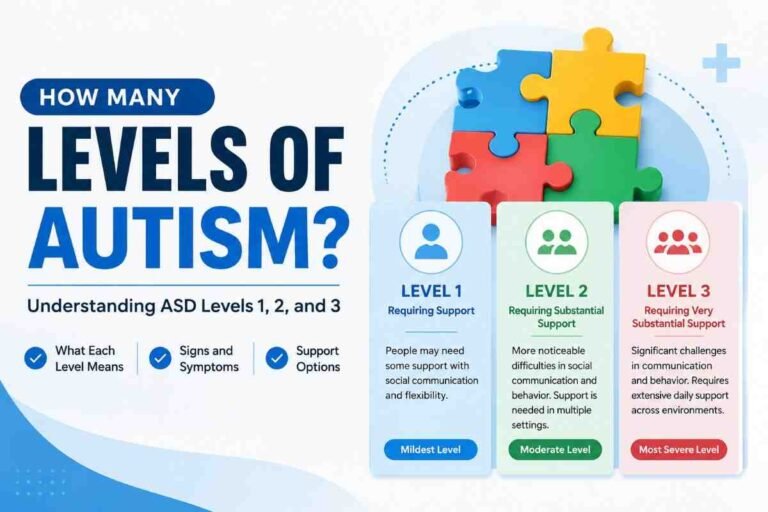
Historically, and in popular culture, the autism spectrum has been incorrectly visualized as a linear scale—a straight line running from “not very autistic” (often labeled “mild” or “high-functioning”) on one end, to “very autistic” (labeled “severe” or “low-functioning”) on the other. If you view the spectrum as a straight line, it is easy to assume that every human being sits somewhere on that line, even if it is at the absolute zero mark.
This linear model is entirely outdated and widely rejected by modern neurodevelopmental specialists.
The Color Wheel and the Spiky Profile
Instead of a straight line, clinicians and autistic advocates now describe the spectrum using models like a color wheel or a mixing board. Autism is multifaceted, comprising several different domains: sensory processing, executive functioning, social communication, motor skills, and repetitive behaviors.
An autistic person does not exist at a single point on a line. Instead, they have a “spiky profile.” They might have exceptionally high abilities in one domain—such as pattern recognition or deep analytical focus—while simultaneously requiring significant daily support for sensory regulation or task initiation. This spiky profile is what places someone on the autism spectrum. A neurotypical person generally has a much flatter, more even profile of cognitive and sensory abilities.
Traits vs. Diagnosis: Where the Confusion Starts
The primary reason people believe everyone is on the spectrum is because autistic traits are human traits.
It is entirely normal for a neurotypical person to hate the texture of velvet, feel exhausted after a networking event, hyper-focus on a new hobby for a week, or prefer their books arranged in alphabetical order. These are isolated traits. Experiencing one or two of them does not make someone “a little autistic,” any more than experiencing sadness makes someone “a little clinically depressed,” or getting a headache means you have a “touch of a migraine.”
When Do Traits Become a Diagnosis?
For a trait to be part of an autism diagnosis, it must meet specific criteria outlined in the DSM-5 (the standard classification of mental disorders).
- Pervasiveness: Autistic traits are not occasional quirks that happen when a person is tired or stressed. They are pervasive. They exist across all environments—at home, at school, at work, and in social settings—and have been present since the early developmental period.
- Clustering: A person must exhibit a cluster of traits across multiple categories, specifically deficits in social communication and the presence of restricted, repetitive behaviors.
- Clinical Significance: This is the most crucial distinction. To warrant a diagnosis, these traits must cause “clinically significant impairment” in social, occupational, or other important areas of functioning.
A neurotypical person who dislikes small talk can still easily navigate a job interview if they have to. An autistic person may find the unspoken social rules of that same interview so opaque, and the sensory environment of the office so physically painful, that they are unable to secure employment despite being highly qualified. The difference is the functional impact.

Why “Everyone is a Little Autistic” is Harmful
While the intention behind the phrase may be benign, the impact on the autistic community is overwhelmingly negative. Autistic advocates frequently cite this phrase as one of the most invalidating things they hear.
It Invalidates Autistic Struggles
Telling an autistic person that “everyone is a little autistic” trivializes their daily reality. It equates the minor inconvenience of a neurotypical person disliking a loud siren with the neurological pain of an autistic person experiencing a sensory meltdown in a grocery store. It dismisses the profound exhaustion of masking—a phenomenon heavily documented in the experiences of high functioning autism in women—by framing it as something “everyone” goes through.
When a neurotypical person claims a piece of the spectrum for themselves based on a minor personality quirk, they are co-opting the label without having to navigate the systemic discrimination, high unemployment rates, and social isolation that often accompany an actual autism diagnosis.
It Erases the Need for Accommodations
If society accepts the premise that everyone is on the spectrum, it becomes incredibly easy to deny accommodations to those who actually need them. If an autistic student requests a quiet space to take an exam due to sensory overload, a teacher who believes “we all have a little trouble focusing” is much less likely to take that request seriously. By normalizing the disability out of existence, we remove the justification for vital support structures.
The Intersection with Other Conditions
The confusion about who is on the spectrum is often compounded by how frequently autism overlaps with, or shares traits with, other neurodivergent conditions.
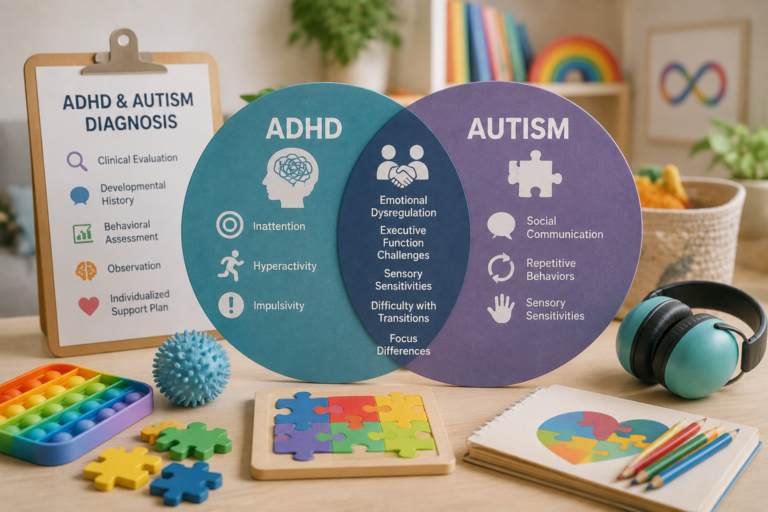
For example, executive dysfunction and hyper-focus are hallmarks of both ADHD and autism. Differentiating between the two requires a careful clinical eye, which is why an  adhd and autism diagnosis often happens simultaneously or sequentially. Furthermore, the sensory processing differences seen in autism can look very similar to the distractibility seen in ADHD, a complexity that is deeply explored when looking at ADHD and auditory processing.
Similarly, the need for intense routine in autism can sometimes be confused with OCD, though the internal motivations for the behaviors are vastly different. Understanding the clinical boundary between autism and obsessive compulsive behaviors is essential to seeing why isolated traits do not equate to a diagnosis. Every Different type of autism profile is unique, but none of them are simply a collection of “normal” human quirks taken to an extreme.
Neurodiversity Does Not Mean Everyone is Neurodivergent
The neurodiversity movement, which is heavily highlighted during campaigns like World Autism Month, advocates for the idea that neurological differences are a natural and valuable part of human variation.
However, neurodiversity simply means that all human brains are diverse. It is a biological fact, much like biodiversity. Within that diverse human population, there are people who are neurotypical (their brain functioning falls within the dominant societal standard) and people who are neurodivergent (their brain functioning diverges significantly from that standard, such as those with autism, ADHD, or dyslexia).
To say “everyone is on the spectrum” is to fundamentally misunderstand neurodiversity. It is the equivalent of saying “everyone is a little left-handed” just because right-handed people sometimes use their left hand to open a jar.
For those looking to understand the clinical definitions of these terms and the criteria that separate traits from diagnoses, professional resources and medical journals available through platforms like Google Scholar provide extensive evidence-based clarity.
FAQ: Understanding the Autism Spectrum
If I relate to autistic traits on social media, does that mean I am autistic?
Not necessarily. Social media often isolates specific traits (like disliking certain textures or hyper-fixating on a TV show) that are highly relatable to the general public. While relating to this content can be a valid reason to research further, a true autism diagnosis requires a pervasive cluster of traits that significantly impact daily functioning, not just isolated relatable habits.
Is the autism spectrum a straight line from mild to severe?
No. The medical community has moved away from the linear “mild to severe” model. The spectrum is now understood as a complex profile of varying abilities. An autistic person might have exceptional cognitive skills but require severe support for sensory regulation and daily living tasks. The linear model fails to capture this “spiky profile.”
Why do autistic people dislike the phrase “we are all a little autistic”?
It is viewed as dismissive and invalidating. It equates common human experiences (like being occasionally socially awkward) with the profound, lifelong neurological differences of autism. It minimizes the real disability and systemic challenges that autistic people face, making it harder for them to advocate for necessary accommodations.
Can you have autistic traits without being on the spectrum?
Yes, absolutely. This is known as the “broader autism phenotype.” Many people, especially relatives of autistic individuals, possess some autistic traits (like a strong preference for routine or specific sensory sensitivities) without meeting the full clinical criteria for an Autism Spectrum Disorder diagnosis.
What does “clinically significant impairment” mean?
In diagnostic terms, this means that the traits a person possesses are not just quirks; they actively interfere with the person’s ability to navigate life. It might mean being unable to maintain employment due to social misunderstandings, suffering physical pain from normal environmental stimuli, or experiencing severe burnout from trying to navigate neurotypical expectations.
Conclusion
The next time you hear someone ask, is everyone on the spectrum, or state that we are all a little bit autistic, recognize it for what it is: a well-intentioned but factually incorrect myth.
Human behavior is incredibly diverse, and it is entirely normal to find common ground with people whose brains work differently than yours. But empathy does not require us to pretend our experiences are identical. We can validate the unique, specific, and often challenging reality of being autistic without needing to claim a piece of the spectrum for ourselves. Acknowledging that autism is a distinct neurological reality, rather than a universal human trait, is the first real step toward genuine understanding and support.