how to tell if you have autism
Figuring out how to tell if you have autism as an adult is rarely a sudden realization. For many, it is the culmination of a lifelong feeling of being slightly out of sync with the rest of the world. It is a quiet, persistent sense that everyone else was handed a social instruction manual that you somehow missed.
For decades, autism was viewed almost exclusively through a pediatric lens. If you were not diagnosed as a young child—perhaps because you did not fit the classic, male-centric presentation, or because you learned to hide your struggles—the medical community often assumed you were simply neurotypical, albeit perhaps quirky, anxious, or introverted.
Today, that understanding has shifted dramatically. A growing number of adults are discovering their neurodivergence in their twenties, forties, and even sixties. If you are reading this and wondering whether your lifelong experiences align with the autism spectrum, you are participating in a very common and increasingly understood journey of self-discovery.
The Reality of Undiagnosed Autism in Adults
Autism Spectrum Disorder (ASD) is a neurodevelopmental condition. This means you are born with it; it dictates how your brain processes information, interprets sensory input, and navigates social environments. You do not suddenly “develop” autism in adulthood. Rather, adults who seek a diagnosis are finally finding the vocabulary to describe a neurological reality they have lived with their entire lives.
The challenge in recognizing autism in adults is that adults have had decades to learn how to adapt. An autistic child might have a visible meltdown in a noisy grocery store. An undiagnosed autistic adult in the same store might silently endure the sensory pain, rush through their shopping, and then collapse in exhaustion on the couch for the rest of the evening. The internal experience is similar, but the external presentation has been socially conditioned.
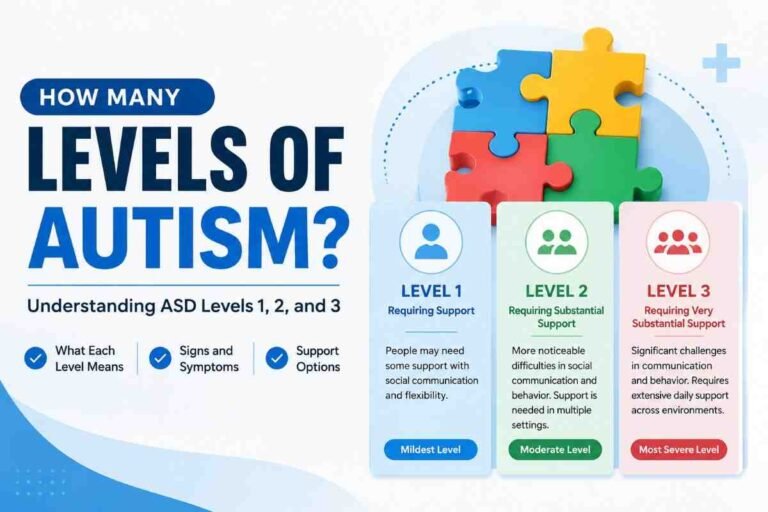
This conditioning is why understanding the  Different type of autism presentations—particularly how they manifest internally rather than externally—is the first step in recognizing whether the label fits your life.
Core Signs of Autism in Adulthood
The clinical criteria for autism, outlined in the DSM-5, focus on two main areas: differences in social communication, and restricted or repetitive patterns of behavior. In adults, these criteria translate into distinct, observable patterns in daily life.
Social Communication and Interaction
Navigating the social world is often one of the most taxing elements of an autistic adult’s day. While some autistic adults are highly social and crave connection, the mechanics of that connection often feel manual rather than intuitive.
- Reading the Room: You may find it difficult to interpret subtle nonverbal cues, such as a shift in someone’s tone of voice, a slight change in facial expression, or the unspoken “vibe” of a group setting.
- The Exhaustion of Small Talk: Casual, unstructured socializing often feels performative and draining. You may strongly prefer deep, specific conversations about topics you are passionate about, and find typical networking or party environments bewildering.
- Literal Processing: Autistic brains tend to process language literally. You might find yourself missing sarcasm, struggling to understand idioms, or taking instructions exactly as they were phrased, which can lead to misunderstandings at work or in relationships.
- Eye Contact: For many autistic individuals, maintaining eye contact feels uncomfortably intimate, distracting, or physically painful. You may have consciously trained yourself to look at the bridge of people’s noses to simulate eye contact.
Sensory Processing Differences
Sensory differences are a hallmark of the autistic experience. Your brain may process sensory input—lights, sounds, textures, smells—either much more intensely (hypersensitivity) or much less intensely (hyposensitivity) than a neurotypical brain.
If you are hypersensitive, ordinary environments can feel physically aggressive. You might find the hum of fluorescent lights maddening, be unable to tolerate the texture of certain fabrics against your skin, or feel instantly overwhelmed by the overlapping conversations in a crowded restaurant. Often, sensory overload is mischaracterized as a panic attack or general anxiety, when it is actually a neurological response to an overwhelming environment. Understanding this distinction is vital, just as it is vital to differentiate between autism and obsessive compulsive behaviors, which can look similar but require very different support.

Repetitive Behaviors and Deep Interests
What the diagnostic manual calls “restricted and repetitive behaviors” often translates into deep passions and a profound need for predictability in an unpredictable world.
- The Need for Routine: You likely find great comfort in routine. When plans change suddenly or expectations shift without warning, you may experience a level of distress that seems disproportionate to others. Routine is not just a preference; it is a regulatory tool.
- Special Interests: Autistic adults frequently have intense, highly focused interests. You might possess encyclopedic knowledge about a specific historical period, a type of technology, or a niche hobby. Engaging in this interest brings immense joy and serves as a way to decompress.
- Stimming: Self-stimulatory behavior (stimming) is how the autistic nervous system regulates itself. As an adult, you may have learned to suppress visible stims (like hand-flapping), replacing them with subtle, socially acceptable movements like clicking a pen, bouncing a leg, picking at your cuticles, or humming quietly.
The Hidden Sign: Masking and Autistic Burnout
Perhaps the most significant barrier to recognizing autism in adults is the phenomenon of masking, also known as camouflaging.
Masking is the conscious or unconscious suppression of autistic traits in order to blend in with neurotypical society. It involves manually calculating eye contact, scripting conversations in advance, mirroring the body language of the person you are talking to, and forcing yourself to endure painful sensory environments without complaining.
Masking is a survival strategy, and it is particularly prevalent among women, which is why high functioning autism in women is so frequently missed until adulthood. However, masking requires a massive amount of cognitive energy. Running a manual override on your natural personality every time you leave the house is unsustainable.
The long-term consequence of heavy masking is autistic burnout. This is a state of profound physical, mental, and emotional exhaustion. During burnout, your ability to mask drops away. You may lose executive function skills, experience heightened sensory sensitivity, and need to withdraw from social contact entirely just to survive. Many adults only begin to suspect they are autistic when they hit a wall of burnout that they cannot push through.
Self-Diagnosis vs. Professional Assessment
If you recognize yourself in these descriptions, the next logical question is what to do about it. The path forward generally splits into self-identification and formal clinical assessment.
The Role of Online Screening Tools
As you research, you will likely encounter online screening questionnaires, such as the Autism Spectrum Quotient (AQ) or the Ritvo Autism Asperger Diagnostic Scale-Revised (RAADS-R).
These tools can be incredibly helpful starting points. They translate clinical criteria into relatable daily experiences. However, it is vital to understand that online quizzes cannot provide a medical diagnosis. They are screening tools meant to indicate whether your traits align with the autistic population, but they cannot account for the nuance, trauma, or complex psychological history of your life.
The Professional Evaluation Process
If you decide to seek a formal diagnosis, the process looks very different than it does for a child. A comprehensive adult autism assessment typically involves:
- A Clinical Interview: A psychologist or psychiatrist who specializes in adult neurodivergence will conduct a lengthy interview about your current challenges, social history, and sensory experiences.
- Developmental History: Because autism is a lifelong condition, the clinician must establish that these traits were present in childhood. They may ask to speak with a parent or older sibling, or ask you to provide old school report cards.
- Differential Diagnosis: The clinician must rule out or identify co-occurring conditions. For example, teasing apart an adhd and autism diagnosis is a common and complex part of the process, as the two conditions overlap significantly in areas like executive dysfunction, as seen in challenges with ADHD and auditory processing.
A formal diagnosis is required if you need to access legal workplace accommodations, disability support, or specific medical interventions. However, the assessment process can be expensive, time-consuming, and difficult to access depending on your location.
The Validity of Self-Identification
Because of the barriers to formal diagnosis—and the historical bias of the medical system against diagnosing adults, women, and people of color—the autistic community generally accepts and validates self-diagnosis.
If you have done the research, read the literature, listened to the lived experiences of autistic adults, and concluded that this neurological framework explains your life, that realization is valid. You do not need a piece of paper from a doctor to begin making sensory accommodations for yourself, setting better boundaries, or unmasking in safe spaces.
What to Do Next
If you suspect you are autistic, the most helpful immediate step is to seek out the lived experiences of other autistic adults. Read books written by autistic authors. Explore neurodiversity advocacy online. The sense of relief that comes from finding a community that speaks your native neurological language is often profound, a reality highlighted frequently during World Autism Month campaigns.
Keep a journal of your sensory triggers, your social exhaustion patterns, and your masking behaviors. Whether you use this journal to prepare for a clinical assessment or simply to better understand your own boundaries, documenting your reality is a powerful way to reclaim it. You can also utilize search engines like Google to find local neurodiversity-affirming therapists who specialize in adult assessments, should you choose to pursue one.
FAQ: Recognizing Autism in Adults
Can you suddenly develop autism in adulthood?
No. Autism is a neurodevelopmental condition, meaning it is present from birth. If you are diagnosed as an adult, it does not mean you suddenly became autistic; it means you have been autistic your entire life, but your traits were missed, misunderstood, or masked until now.
How is autism different from social anxiety?
Social anxiety is driven by a fear of negative judgment or humiliation in social situations. While autistic adults can absolutely experience social anxiety, their social difficulties are primarily driven by neurological differences in how they process communication, nonverbal cues, and sensory input. An autistic person might avoid a party because the noise is physically painful and the social rules are confusing, not necessarily because they fear being judged.
Are online autism tests accurate?
Online screening tools like the AQ or RAADS-R are statistically reliable for indicating the presence of autistic traits, but they are not diagnostic tools. They can yield false positives or false negatives because they lack clinical context. They are best used as a starting point for self-reflection or to justify seeking a professional evaluation.
What is autistic burnout?
Autistic burnout is a state of severe physical, mental, and emotional exhaustion caused by the long-term strain of masking autistic traits and navigating a world designed for neurotypical people. It often results in a loss of skills, increased sensory sensitivity, and an inability to continue masking. It is a frequent catalyst for adults seeking a diagnosis.
Do I need a formal medical diagnosis?
It depends on your goals. If you need specific workplace accommodations under disability law, or access to government-funded support services, a formal medical diagnosis is usually required. If you are simply seeking self-understanding, community, and a framework to better manage your mental health and sensory needs, self-identification is widely accepted within the autistic community and can be profoundly validating on its own.
Conclusion
Figuring out how to tell if you have autism is a deeply personal process of looking backward to make sense of your history, and looking forward to build a more accommodating future. The realization that you are not broken, but simply operating on a different neurological operating system, is often the first step toward genuine self-acceptance.
Whether you pursue a formal clinical assessment or find peace in self-identification, discovering that you are part of the neurodivergent community offers a new lens through which to view your life. It provides the vocabulary to ask for what you need, the grace to forgive yourself for the things you find difficult, and the freedom to finally stop pretending to be someone you are not.