signs of autism in newborns
Few concerns weigh more heavily on a new parent’s mind than the possibility that something in their baby’s development might not be unfolding as expected. If autism runs in the family, or if you have simply read enough to know it is more common than once believed, you may be watching your newborn’s every coo and glance with careful attention.
The honest answer to the question of whether autism can be detected in newborns is nuanced, and it deserves a clear explanation rather than a vague reassurance or an alarmist checklist. A formal autism diagnosis cannot reliably be made in the newborn stage. What we do know, however, is that the early weeks and months of a baby’s life can offer subtle, meaningful signals worth monitoring and that catching those signals early makes a genuine difference to a child’s developmental trajectory.
This article walks through what current research and clinical practice say about early behavioral indicators, how the brain differences associated with autism begin emerging before any diagnosis is possible, what puts a baby at higher statistical risk, and what parents can realistically do with that information.
Can Autism Actually Be Detected at Birth?
The short answer is no, not definitively. Autism Spectrum Disorder is diagnosed based on observed developmental behaviors, not a blood test or brain scan. The behavioral patterns that define an autism diagnosis, including differences in social communication, restricted and repetitive behaviors, and sensory processing, require developmental windows to emerge that simply have not opened yet in a newborn.
The American Academy of Pediatrics considers a formal ASD diagnosis to be reliable and stable at around age two. Some experienced developmental specialists can identify the condition as early as eighteen months when the behavioral picture is sufficiently clear. Before that, clinicians work in the realm of monitoring and developmental surveillance rather than confirmed diagnosis.
That said, researchers have made significant progress in identifying early indicators that appear in the first year of life and correlate with a later autism diagnosis. These are not diagnostic tools, but they are clinically meaningful signals.

Why the First Year Matters: What Research Has Found
Much of what we now understand about early autism indicators comes from high-risk sibling studies. Researchers began following babies who had an older sibling already diagnosed with autism, a group researchers call “baby sibs,” because siblings of autistic children have a statistically higher likelihood of also being autistic. Studies like the Infant Brain Imaging Study (IBIS), conducted across multiple university research centers, used MRI scans to examine these infants before behavioral symptoms could be observed.
The findings were revealing. Infants who later received an autism diagnosis showed measurable differences in cortical surface area expansion between six and twelve months of age, followed by accelerated overall brain volume growth between twelve and twenty-four months. In some studies, MRI data collected at six months was able to predict a later autism diagnosis with accuracy rates exceeding eighty percent. Researchers also found distinct patterns in brain connectivity at as young as six weeks of age in high-likelihood infants.
This research does not mean MRI scanning is a practical screening tool for newborns. It remains a research method, not a clinical one. But it confirms something important: the neurological underpinnings of autism are present from very early in life, long before any behavioral checklist can reliably capture them.
Family History and Genetic Risk
One of the clearest practical takeaways from this body of research involves genetic risk. If a family already has one child with autism, the probability that a subsequent child will also be diagnosed is approximately twenty percent. If there is more than one older sibling with autism, some studies place that recurrence risk between thirty-two and thirty-seven percent. These figures are substantially higher than the general population prevalence.
This does not mean that a baby born into a family with autism will necessarily be autistic. Genetics account for somewhere between forty and eighty percent of autism risk, reflecting a complex interaction of hundreds of different genes, both inherited variants and rare spontaneous mutations. The remaining risk involves environmental and developmental factors that are still being studied. But awareness of family history genuinely matters when it comes to knowing which children warrant closer developmental surveillance.
Parents of younger siblings of autistic children are encouraged to mention this history explicitly to their pediatrician. It is information that should shape how developmental monitoring is approached from birth.
Observable Early Signs in the First Twelve Months
While no individual behavior in isolation should be interpreted as evidence of autism, there are developmental patterns that, when consistent and persistent across different settings, warrant professional attention. The following are behavioral domains that clinicians and researchers monitor in the first year of life.
Social Engagement and Eye Contact
In the first few months of life, most neurotypical infants begin orienting strongly toward human faces. They track their caregiver’s gaze, begin to recognize familiar faces, and start smiling socially, not just reflexively, by around six to eight weeks. By three months, these social smiles become reliably responsive to interaction.
Some infants who are later diagnosed with autism show reduced interest in faces from early on, or they make inconsistent, fleeting eye contact that does not sustain during social exchanges. It is important to note that some variation in early social behavior is entirely normal, and a single observation of reduced eye contact at a single pediatric appointment means very little. What carries clinical weight is a persistent pattern of limited social orientation across time and different caregiving contexts.
Babbling and Vocal Reciprocity
Communication development in infancy begins well before the first recognizable word. Healthy early development includes cooing sounds from around two months, progressing toward back-and-forth vocal exchanges where the baby responds to a caregiver’s voice by vocalizing in return. By nine to twelve months, most infants are babbling with varied consonant-vowel combinations.
Delayed or absent babbling, or a noticeable lack of vocal responsiveness to caregiver speech, is one of the more consistent early indicators noted in retrospective studies of children later diagnosed with autism. When a baby rarely initiates or responds to the kind of playful sound exchanges that typically characterize early caregiver-infant communication, it is worth discussing with a pediatrician.
Response to Name
By approximately six to nine months, most infants will reliably turn toward the sound of their own name. The consistent failure to respond when called by name, even when the infant does not appear to have a hearing difficulty, is one of the more frequently cited early red flags.
This behavior is linked to something called joint attention, the developing ability to share attention with another person toward the same object or event. Differences in joint attention are central to how autism affects social development, and the foundations of that capacity are measurable in the first year of life.
Gestures and Imitation
Pointing, reaching, waving, and clapping are social communication milestones that typically emerge between nine and twelve months. These gestures serve a communicative function beyond simply obtaining objects; they involve sharing experiences with another person. The developmental absence of proto-declarative pointing, which is pointing simply to share interest in something rather than to request it, is considered particularly meaningful.
Similarly, imitation of simple actions and facial expressions is an early building block of social learning. Infants who rarely copy sounds, expressions, or basic movements may be showing early differences in the social mirroring that neurotypical development relies on.
Sensory Responses
Autistic individuals frequently experience sensory processing differences, meaning their nervous systems respond to sensory input in ways that are quantitatively or qualitatively different from typical responses. In infants, this can appear as either heightened distress in response to ordinary sounds, textures, or handling, or conversely, as unusually low responsiveness to sensory stimulation that would normally attract a baby’s attention.
A baby who startles intensely and repeatedly at normal household sounds, or one who appears not to notice when a loud sound occurs nearby, may be showing early sensory processing differences. Neither pattern alone predicts autism, but both are worth raising with a healthcare provider when consistently observed.
The Phenomenon of Developmental Regression
One of the most distressing experiences a parent can have is watching a child who seemed to be developing typically begin losing skills they previously had. This is known as developmental regression, and it is a recognized pattern within autism development. It most commonly occurs between fifteen and thirty months, with many cases noted around eighteen to twenty-four months.
A child who was babbling, making eye contact, and responding to their name may gradually or suddenly stop doing so. Words that appeared are no longer used. Social responsiveness that seemed present fades. This regression is genuinely frightening for families and can feel especially confusing when the early months gave no indication of anything unusual.
The important message for parents observing this pattern is not to wait and hope the lost skills return on their own. Prompt consultation with a developmental pediatrician or child neurologist is warranted. Early intervention services can begin based on documented developmental regression even before a formal diagnosis is established, and the earlier those services begin, the better the outcomes research consistently shows.
Understanding how autism can look very different across individuals is also important context for parents navigating this stage. The article on what is high-functioning ASD is a valuable resource for families whose child’s early presentation does not fit the more visible picture of autism they may have encountered elsewhere.
What Early Intervention Actually Does
The significance of monitoring the early signs of autism in newborns and infants is not about accelerating anxiety or rushing toward a diagnosis. It is about preserving the window during which the developing brain is most capable of establishing new neural pathways through experience and targeted support.
The first three years of life represent a period of exceptional neuroplasticity. When developmental differences are identified early and appropriate support begins, whether through speech-language therapy, occupational therapy, developmental behavioral intervention, or other evidence-based approaches, children often make substantially greater gains than those who begin the same interventions at age four or five.
The brain does not stop being adaptive after age three, and late-identified autistic children can and do benefit enormously from intervention at any age. But the research evidence for the greatest developmental impact consistently points to the earliest possible start.
When to Talk to Your Pediatrician
Parental concern is itself clinically relevant information. Research consistently finds that parents who raise concerns about their child’s development are correct in those concerns far more often than they are not. The CDC’s “Learn the Signs. Act Early.” initiative specifically encourages parents to trust their observations and bring them to their doctor’s attention rather than waiting for more obvious signs to appear.
You should speak with your pediatrician promptly if your baby shows any of the following consistently, not just occasionally:
- No social smiling or joyful facial expressions in response to interaction by six months
- No babbling or back-and-forth vocal exchanges by nine months
- No gestures such as pointing or waving by twelve months
- Consistent failure to respond to their own name by nine to twelve months
- Any loss of previously established skills at any age
These are not causes for panic, and many children who show one or more of these patterns will not be diagnosed with autism. They are, however, appropriate reasons to request a developmental evaluation. A referral to a developmental pediatrician, child psychologist, or early intervention program does not require a formal diagnosis in most regions, and it can begin the process of understanding your child’s needs with far more precision than continued watching and waiting.
For families looking further along the developmental road and wondering how autism changes across different ages and presentations, our article on OCD vs autism addresses some of the diagnostic complexity that can arise as children grow and their behavioral profiles become more nuanced.
How Pediatric Screening Works
In the United States, the American Academy of Pediatrics recommends autism-specific screening at the eighteen-month and twenty-four-month well-child visits, using standardized tools such as the Modified Checklist for Autism in Toddlers, Revised (M-CHAT-R). General developmental surveillance occurs at every well-child visit from birth onward.
Screening tools are not diagnostic instruments. A child who screens positive on the M-CHAT-R is referred for a comprehensive diagnostic evaluation, which may involve multiple specialists and a more in-depth assessment process. The Centers for Disease Control and Prevention provides milestone tracking resources and information on developmental monitoring that parents can use between appointments to stay informed about their child’s progress.
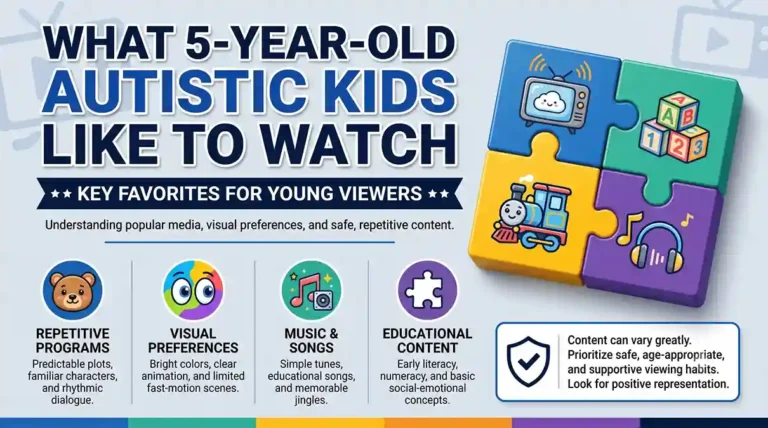
It is also worth noting that autism does not look the same in every child. The spectrum is broad, and presentations in girls are often different from the presentations in boys that have historically dominated diagnostic criteria and public awareness. The diversity within autism, including how different types of autism may present from an early age, means that awareness of varied developmental patterns is valuable for any parent or caregiver. Reading about what autistic children enjoy and how their development unfolds across different ages helps build a fuller picture of the spectrum’s range.
FAQ: Signs of Autism in Newborns
At what age can autism first be reliably diagnosed?
The American Academy of Pediatrics considers an autism diagnosis to be reliable and clinically stable by age two. Some experienced specialists make diagnoses at eighteen months when the behavioral profile is sufficiently clear. A formal diagnosis is not possible in the newborn period, though early developmental monitoring can begin from birth, particularly in high-risk families.
Do all autistic children show signs in the first year of life?
Not necessarily. Some children appear to develop typically through the first year and then show a developmental plateau or regression between fifteen and thirty months. Others do show early differences in social attention, babbling, or sensory response in infancy. There is no single trajectory that all autistic children follow, which is one reason why ongoing developmental surveillance matters more than a single early assessment.
My baby does not make much eye contact. Does that mean they have autism?
Reduced eye contact in infancy can reflect many things, including typical temperament variation, prematurity, hearing differences, or developmental delays unrelated to autism. It is worth discussing with your pediatrician, particularly if it is part of a broader pattern involving limited social smiling, reduced babbling, or poor responsiveness to your voice. A single behavior evaluated in isolation carries limited diagnostic meaning.
What should I do if autism runs in my family?
Tell your pediatrician during the first well-child visit. A family history of autism in a sibling raises statistical risk significantly and warrants more proactive developmental monitoring from birth. Your pediatrician may refer you to a developmental specialist for periodic assessments rather than waiting until the standard eighteen-month screening. Early intervention services can sometimes begin even before a diagnosis if developmental differences are documented.
Is developmental regression always a sign of autism?
Not always. Developmental regression can have several causes, including illness, stress, significant environmental change, or other neurological conditions. However, regression that involves the loss of social or communication skills, particularly in the context of other developmental differences, is closely associated with autism and warrants prompt evaluation. Any time a child loses previously established skills, seeking professional assessment quickly is the appropriate response.
Conclusion
The signs of autism in newborns exist at the edge of what is currently observable and what can be reliably interpreted. A true diagnosis is not possible in the newborn stage, but the neurological differences that will eventually shape an autism diagnosis are already taking form. The early weeks and months of life offer a window of observation rather than diagnosis, and what parents and clinicians do with that observation window genuinely matters.
Developmental surveillance, informed awareness of early red flags, and the courage to raise concerns promptly rather than waiting for certainty are the most powerful tools available to families during this stage. The research is consistent on one point above all others: earlier support leads to better outcomes, and no concern raised too early is ever wasted.