
Different Types of Autism: A Complete Guide to the Autism Spectrum
Autism looks different in almost every person it touches, which is exactly why so many people still search for the “different types of autism” even though the diagnostic manual used across the United States no longer divides autism into separate categories. If you’ve come across terms like Asperger’s syndrome, high-functioning autism, or PDD-NOS and wondered how they fit into what doctors call autism today, this guide walks through where those terms came from, what has replaced them, and what actually varies from one autistic person to the next.
Autism spectrum disorder, or ASD, is a neurodevelopmental condition that affects how a person communicates, interacts socially, and processes the world around them. It’s called a spectrum for a reason. Two people with the same diagnosis can have completely different support needs, communication styles, and daily experiences. Understanding the history of autism’s classification, along with the levels and traits used today, gives a much clearer picture than searching for rigid “types” alone.
Autism as a Spectrum, Not a Set of Fixed Categories
Before 2013, autism wasn’t a single diagnosis. It was split across several related conditions grouped under the umbrella term pervasive developmental disorders. Clinicians would diagnose a child with one specific label depending on their symptoms, language ability, and cognitive profile. That system changed with the release of the fifth edition of the Diagnostic and Statistical Manual of Mental Disorders, known as the DSM-5, published by the American Psychiatric Association.
The DSM-5 folded the old separate diagnoses into one category: autism spectrum disorder. Instead of assigning a person to a discrete type, clinicians now describe where someone falls along a continuum of traits and assign a severity level based on the amount of support they need. This shift didn’t happen because autism itself changed. It happened because research showed that clinicians weren’t applying the older categories consistently, and many children who might have received an Asperger’s diagnosis in one clinic were being diagnosed with high-functioning autism in another, even though their presentations were nearly identical.
For families and adults who were diagnosed years ago, this history still matters. If your diagnosis predates 2013, your paperwork might still reference one of the older labels, and your clinician may continue using that term informally even though it no longer exists as a standalone diagnosis.
The Former Types of Autism Before the DSM-5
Understanding these older categories helps explain why so many people still use this language, even in casual conversation, support groups, and online communities.
Autistic Disorder
Autistic disorder, sometimes called classic autism or Kanner’s autism after the psychiatrist who first described it, was historically the most severe of the pervasive developmental disorders. It typically involved noticeable delays in language development, significant challenges with social communication, and repetitive behaviors that were apparent by early childhood. Many children with this diagnosis also had an intellectual disability, though not universally.
Asperger’s Syndrome
Asperger’s syndrome described individuals who had the social and behavioral traits associated with autism but without a significant delay in language development or cognitive functioning. People with this diagnosis often had strong verbal skills, average or above-average intelligence, and intense, focused interests in specific subjects. Many adults who received an Asperger’s diagnosis before 2013 still identify with the term today, even though it’s been absorbed into the broader ASD diagnosis.
Pervasive Developmental Disorder-Not Otherwise Specified (PDD-NOS)
PDD-NOS was something of a catch-all diagnosis. It applied to children who showed some, but not all, of the criteria for autistic disorder or Asperger’s syndrome, or whose symptoms didn’t neatly fit either category. Because the criteria were broad and somewhat subjective, PDD-NOS diagnoses varied widely in severity and presentation, which was part of the reason clinicians pushed for a single, more consistent spectrum-based system.
Childhood Disintegrative Disorder
This was a rare and more severe condition in which a child developed typically for at least two years before losing previously acquired skills in language, social function, motor ability, or self-care. Because of how dramatic and uncommon this regression is, childhood disintegrative disorder is now considered part of the autism spectrum but is recognized as clinically distinct from more gradual presentations.
Rett Syndrome
Rett syndrome was also historically grouped with the pervasive developmental disorders, though research eventually identified it as a distinct genetic condition, caused by a mutation on the MECP2 gene, that primarily affects girls. Because its cause and progression differ so clearly from autism, Rett syndrome is generally no longer classified as a type of autism in current diagnostic practice, even though it shares some overlapping traits.
The Three Levels of Autism Spectrum Disorder Used Today
Rather than sorting people into separate diagnoses, the DSM-5 uses three severity levels to describe how much support an autistic person needs. These levels apply to both children and adults and are meant to guide services and accommodations, not to label a person’s worth, intelligence, or long-term potential.
Level 1: Requiring Support
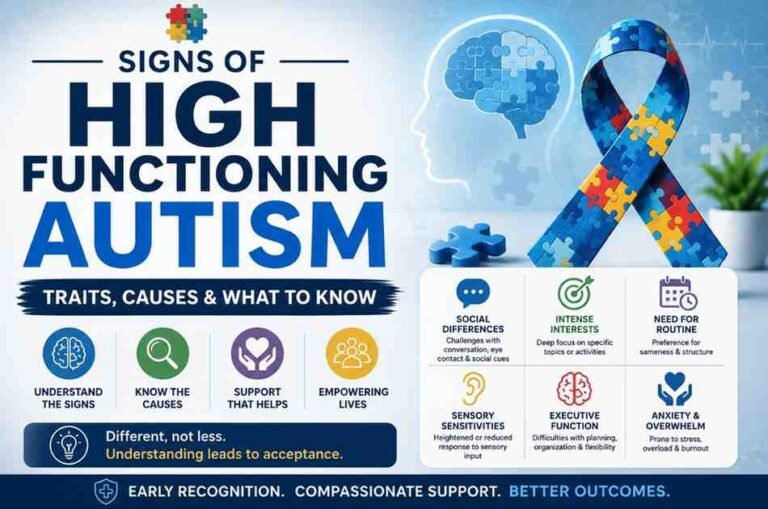
People at level 1 often communicate verbally and may function independently in many areas of life, but they can still struggle with initiating social interactions, adapting to unexpected changes, or organizing daily tasks. This level roughly corresponds to what was once informally called high-functioning autism, though clinicians increasingly avoid that phrase because it can understate the very real challenges people at this level face.
Level 2: Requiring Substantial Support
At level 2, social communication difficulties are more noticeable even with support in place. Individuals may have limited verbal communication, more pronounced repetitive behaviors, and more difficulty coping with changes in routine. Support at this level often includes structured therapy, consistent routines, and accommodations at school or work. If you want a deeper breakdown of what this level looks like day to day and how it’s typically supported, our guide to Level 2 autism covers it in detail.
Level 3: Requiring Very Substantial Support
Level 3 describes the most significant support needs. Communication may be minimal or largely nonverbal, and repetitive behaviors or a strong resistance to change can significantly affect daily functioning. People at this level typically require consistent, hands-on support across most areas of daily life, including communication, self-care, and safety.
It’s worth remembering that these levels aren’t permanent labels frozen in time. A person’s support needs can shift depending on their environment, age, access to therapy, and stress levels, which is one reason many clinicians describe autism as a dynamic spectrum rather than three fixed boxes.
Common Signs and Characteristics Across the Spectrum
While presentation varies enormously, there are traits that clinicians look for regardless of where someone falls on the spectrum:
- Differences in eye contact, facial expression, or body language during social interaction
- Difficulty with back-and-forth conversation or understanding unspoken social rules
- Strong preference for routines and distress when those routines are disrupted
- Repetitive movements or speech patterns, sometimes called stimming
- Intense, highly focused interests in specific topics
- Sensory sensitivities to sound, light, texture, or touch
- Delayed language development in some, though certainly not all, autistic individuals
These signs typically emerge in early childhood, but recognition isn’t limited to kids. A growing number of adults are being diagnosed later in life, often after recognizing these patterns in themselves or a family member. If that sounds familiar, our detailed article on the signs of autism in adults walks through what late diagnosis can look like and why so many adults are identified only after years of masking their traits.
Co-Occurring Conditions Linked to Autism
Autism rarely exists in isolation. According to national health survey data, the vast majority of autistic children have at least one co-occurring condition. ADHD is one of the most common, affecting roughly 30 to 40 percent of autistic individuals. Anxiety disorders are also widespread, along with developmental delay, epilepsy, gastrointestinal issues, sleep difficulties, and in some cases intellectual disability. Understanding these overlapping conditions matters because effective care usually means addressing autism and any co-occurring conditions together rather than treating them separately.
How Common Is Autism in the United States
According to the CDC’s Autism and Developmental Disabilities Monitoring Network, roughly 1 in 31 children in the United States was identified with autism spectrum disorder based on the most recent surveillance data. That figure has climbed steadily over the past two decades, up from roughly 1 in 150 children around the year 2000. Researchers largely attribute this rise to broader diagnostic criteria, greater awareness among clinicians and families, and more consistent screening practices, rather than a sudden epidemic. Autism is also diagnosed more often in boys than girls, though awareness of how autism presents differently in girls and women has been improving diagnostic accuracy in recent years.
What Causes the Different Presentations of Autism
There isn’t one single cause of autism, and there’s no evidence linking it to parenting style or vaccines. Research points to a combination of genetic and environmental factors that influence brain development before birth. Certain genetic conditions, including fragile X syndrome and tuberous sclerosis, are associated with higher rates of autism, and having a sibling with autism increases the likelihood of a diagnosis. Advanced parental age at conception and complications during pregnancy or birth have also been studied as contributing factors, though no single cause explains every case. This is part of why autism shows up so differently from person to person: it isn’t one condition with one origin, but a spectrum shaped by many overlapping biological factors.
Diagnosis: How Clinicians Identify Autism Today
Diagnosis typically starts with developmental screening during routine pediatric checkups, followed by a more comprehensive evaluation if a concern is flagged. That evaluation usually involves a team that may include a developmental pediatrician, psychologist, or neurologist, observing behavior, reviewing developmental history, and using standardized assessment tools. For adults, diagnosis often relies more heavily on self-reported history, structured interviews, and input from family members who can describe childhood behavior patterns. Because there’s no blood test or brain scan that confirms autism, diagnosis depends on clinical expertise and can sometimes take months, particularly for adults seeking an evaluation for the first time.
Support and Treatment Approaches
There’s no cure for autism, and most clinicians and autistic self-advocates agree that a cure isn’t the right framework to begin with. Instead, treatment focuses on building skills, reducing distress, and improving quality of life. Common approaches include:
- Applied behavior analysis (ABA) therapy, which focuses on building specific skills and reducing behaviors that interfere with daily life, though its use is debated within the autistic community and approaches vary widely in how they’re delivered
- Speech and language therapy for communication development
- Occupational therapy to support sensory processing and daily living skills
- Social skills training and support groups
- Educational accommodations, including individualized education programs (IEPs) in schools
- Medication to manage co-occurring conditions like anxiety or ADHD, though there’s no medication that treats autism itself
The right combination of support depends heavily on the individual’s level of need, age, and personal goals, which is why treatment plans should always be developed with a qualified clinician rather than applied as a one-size-fits-all approach.
Frequently Asked Questions
Are there still different types of autism today?
Not in the way autism used to be diagnosed. Since 2013, the DSM-5 has used a single diagnosis, autism spectrum disorder, along with three severity levels that describe support needs rather than separate categories.
What are the 5 different types of autism people usually refer to?
Most people referencing five types are thinking of the older DSM-4 categories: autistic disorder, Asperger’s syndrome, PDD-NOS, childhood disintegrative disorder, and Rett syndrome. All but Rett syndrome are now considered part of the single autism spectrum disorder diagnosis.
Is Asperger’s syndrome still a valid diagnosis?
It’s no longer used as a formal diagnosis in the United States, but many people who received that diagnosis before 2013 still identify with the term, and clinicians may reference it informally to describe traits associated with what is now considered level 1 autism.
What is the difference between the levels of autism and the old types of autism?
The old types were based on separate diagnostic criteria for distinct conditions, while the current levels describe how much support one single diagnosis, autism spectrum disorder, requires. Levels focus on functional support needs rather than distinguishing separate disorders.
Can an autistic person’s level change over time?
Yes. Support needs can shift with age, therapy, environment, and stress, which is why clinicians describe autism levels as a snapshot of current needs rather than a permanent classification.
Final Thoughts
The idea of separate “types” of autism reflects how the condition used to be diagnosed, not how it’s understood today. Autism spectrum disorder is now recognized as a single diagnosis that shows up differently in every person, described through severity levels rather than fixed categories. Whether you’re trying to understand an old diagnosis, a new one, or your own traits later in life, the most useful takeaway is that autism is genuinely a spectrum, and no two autistic people experience it in quite the same way. If you suspect that you or someone you care about may be autistic, a proper evaluation from a qualified clinician remains the most reliable way to get an accurate picture and access the right support.