What Makes Toothbrushing Genuinely Easier for a Sensory-Sensitive Child
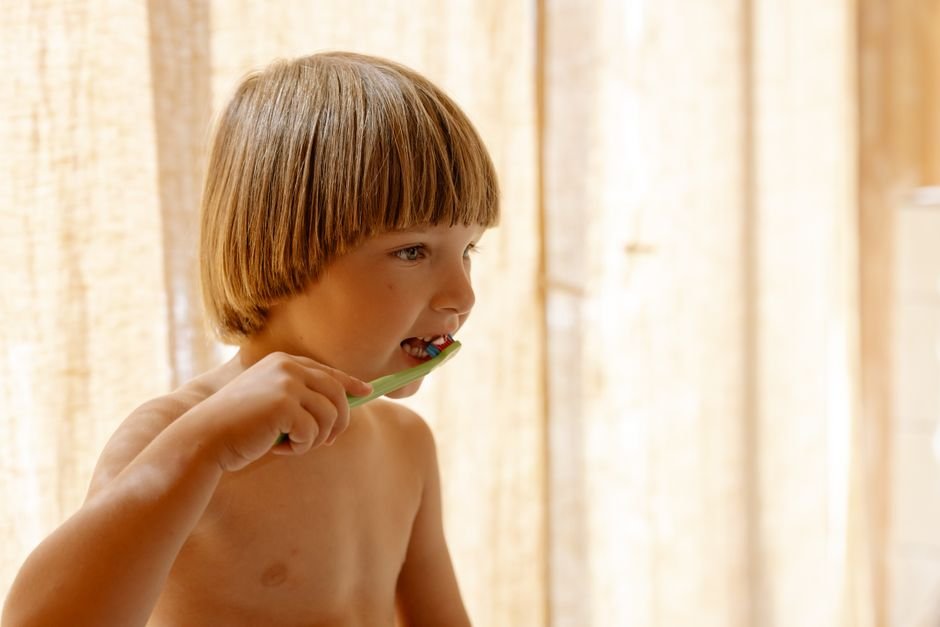
Toothbrushing is hard for many sensory-sensitive kids because it stacks several strong sensations at once: a foreign texture in the mouth, a sharp flavor, foam, and someone else’s hand near the face. Sensory-friendly toothbrushing works by changing those pieces one at a time until the whole routine is tolerable.
Look at which part your child objects to most. Gagging suggests foam or brush size. Pulling away at the first touch suggests the bristles or the approach. Spitting immediately usually points to flavor.
Adjusting texture and flavor for sensory-friendly toothbrushing
Start with the brush. Extra-soft bristles, a smaller head, or a silicone brush can feel very different from a standard one. Some children do better with a three-sided brush that covers more of each tooth at once, so brushing is over sooner. Others prefer an electric brush for its predictable, steady motion, while some find the buzzing unbearable. There’s no single right answer, so try one change at a time.
Flavor is often the biggest barrier. Mint can feel burning to a sensitive mouth. Mild, unflavored or low-foam toothpastes exist, and many children accept them far more easily. Ask your child’s dentist which fluoride toothpaste to use and how much is right for their age, since that guidance changes as children grow.
Temperature matters too. Some kids tolerate lukewarm water for rinsing and wetting the brush much better than cold water from the tap.
Changing the routine around it
Predictability helps. Brush at the same point in the evening routine each night, count or sing so there’s a clear end, and use the same order around the mouth every time. A visual step card can take the surprise out of it, much like the ones used in a predictable bedtime routine.
Let your child hold the brush, or put their hand over yours, whenever possible. Having some control over the pace makes the sensation less threatening. A mirror can help some children see what’s coming. Others do better sitting down or lying with their head in your lap, where they feel steady.
Keep it short and calm. If a session is going badly, stop, and try again later rather than holding a child still. Forcing it tends to make every future attempt harder, and trust is worth more than one missed brushing.
Our overview of sensory processing differences explains why the mouth can be such an intense area for some people.
Bringing in help
For something to try tonight, pick one variable, such as switching to an unflavored paste or a softer brush, and change only that for a week. You’ll learn more than by changing everything at once.
Tell your dentist about your child’s sensory needs before appointments. A pediatric dentist experienced with autistic children can suggest options and watch for problems early, and an occupational therapist can help if the sensitivity reaches beyond the mouth. The American Academy of Pediatrics’ family site, HealthyChildren.org, covers children’s oral health basics.
Progress here is often slow, and slow still counts.