What Co-Regulation Actually Means for a Parent and Child
Co-regulation is the idea that a child’s nervous system can borrow calm from a nearby adult before it’s able to produce that calm on its own. It isn’t a technique you perform so much as a state you bring into the room, and a child’s body responds to it whether or not either of you names what’s happening.
It starts with your own state, not theirs
A dysregulated child can’t be talked down by a dysregulated adult, even a well-meaning one. If your voice is tight, your breathing is fast, or you’re bracing for things to escalate, your child picks that up before your words register. The first move is often invisible: slowing your own breathing, dropping your shoulders, lowering your voice, before you say or do anything else.
This is harder than it sounds in the middle of a hard afternoon, and it’s worth planning for in advance rather than trying to invent in the moment. Some parents find it helps to have a private cue for themselves — a phrase, a breath count, stepping back a pace — that they practice when things are calm, so it’s available when things aren’t.
What it looks like in practice
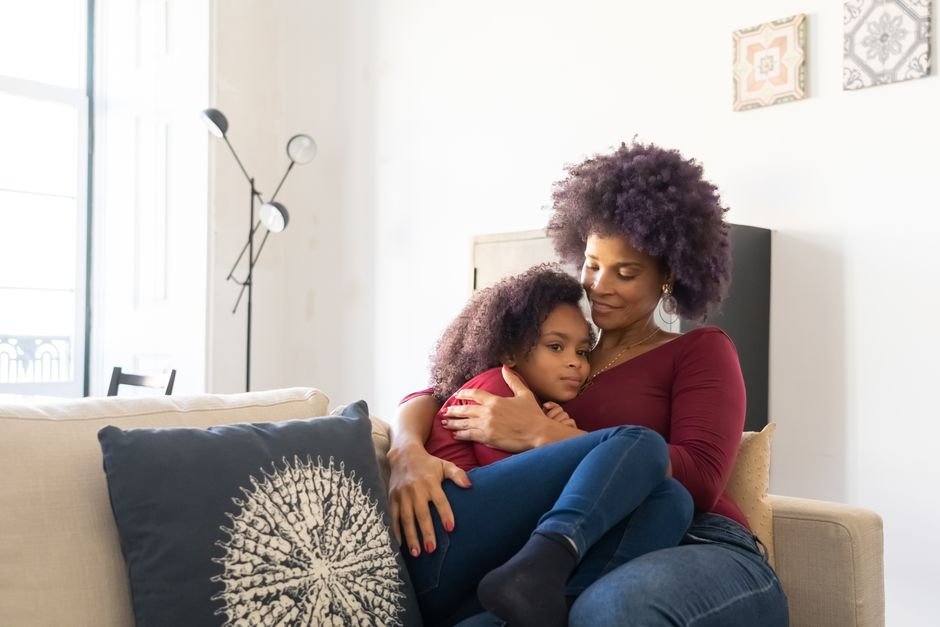
Co-regulation isn’t one specific script. For some children it’s sitting nearby without talking, offering presence without pressure to perform calm on cue. For others it’s a steady, low voice narrating what’s happening: “You’re safe, I’m right here, we can wait this out.” A calm-down space your child already trusts makes this easier, since you’re not also fighting an overstimulating environment at the same time.
It’s worth separating this from a meltdown itself. Co-regulation is the support offered during and after distress — it isn’t a way to prevent every meltdown, and it isn’t a discipline strategy. If you’re unsure whether what you’re seeing is a meltdown or something else, the difference between meltdowns and tantrums is worth reading, since the response that helps differs for each.
Why it matters over time
Children build their own capacity for self-regulation gradually, through repeated experiences of being co-regulated by someone steady. It’s less like teaching a skill directly and more like lending a scaffold that gets used less over time, as the child learns what calm feels like and how to find it. That timeline is different for every child, with no fixed age it should happen by, and some days will look like a step backward even when the overall direction is forward.
This isn’t about suppressing a reaction or getting a child to stop stimming or expressing distress outwardly — the goal is support, not compliance. If a child’s distress involves self-injury, a pattern of harm, or doesn’t ease with your usual approach, that’s a conversation for a developmental pediatrician or a clinical psychologist who knows your child, not something to troubleshoot alone from an article. The American Academy of Pediatrics has general guidance on children’s emotional wellness worth reading alongside professional support.
Some days co-regulation looks like sitting on the floor together for twenty minutes doing nothing else. That’s not wasted time — it’s the whole method.