What Makes a Playground Genuinely Accessible, Not Just Physically
Ask most people what makes a playground accessible and they will mention ramps, wide paths, and wheelchair-height equipment. All of that matters. But a sensory accessible playground also considers what a place sounds like, how crowded it gets, what surfaces feel like underfoot, and whether there is anywhere to retreat to when it becomes too much.
For a lot of autistic kids, those factors decide whether a playground is somewhere they can play or somewhere they leave after five minutes.
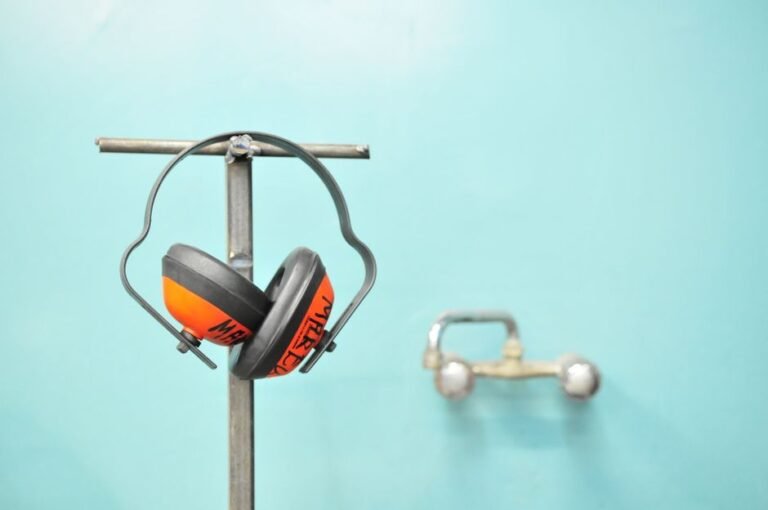
Start with sound. Hard surfaces, metal slides, and enclosed courts bounce noise around. Playgrounds next to busy roads, sports fields, or school pickup lines get loud at predictable times. Parks with trees, grass, and some distance between equipment tend to feel calmer. You can also learn the quiet hours of your local playground by visiting at a few different times. Weekday mornings, mealtimes, and the hour after a rain shower are often surprisingly peaceful.
Then look at crowding and layout. Equipment arranged in tight clusters means children are constantly passing close to one another. Spread-out layouts, with more than one route to each piece of equipment, make it easier to play without being bumped. Fences matter too, especially for children who may wander or bolt, and many parents look for a single clear entrance. A gate that closes on its own and a boundary you can see from every bench make it far easier for a parent to relax.
Textures and movement deserve attention. Rubber surfacing, wood chips, sand, and grass all feel different, and some children will not walk on one of them. Playgrounds that offer swinging, spinning, climbing, and rocking give children who seek movement plenty to do; basket swings in particular work for kids of many sizes and for children who prefer to lie down. Our piece on vestibular input and regulation explains why movement can be so settling for some kids.
Signs of a sensory accessible playground
- A shaded, semi-enclosed space at the edge where a child can sit away from the action.
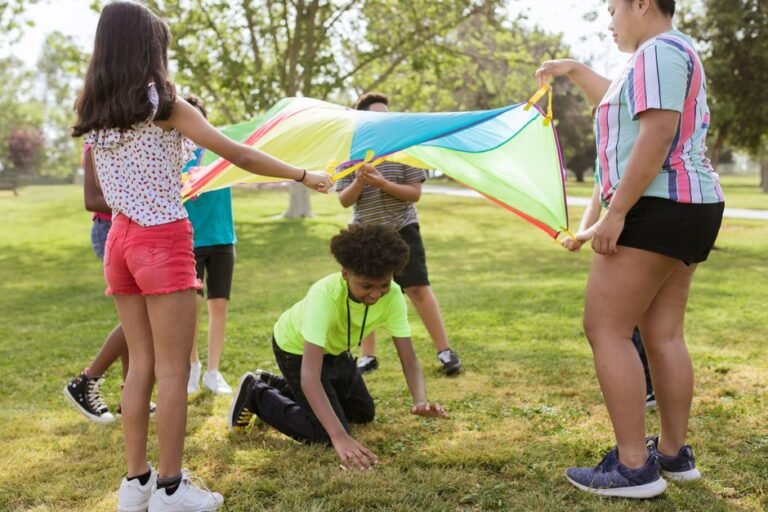
- Equipment for play side by side, like double slides, sand tables, or musical panels.
- Clear sightlines so a parent can watch from a bench without hovering.
- Variety in height and challenge, so there is something for many ages and abilities.
Side-by-side equipment is worth calling out. Many autistic children enjoy being near other kids without interacting directly, and a playground that makes room for that supports how they play. We cover this in more detail in what parallel play means for autistic kids.
One concrete step: visit your nearest playground on a weekday morning without your child and note where the quiet spots, the fence gaps, and the movement equipment are. It turns the first family visit into a known place instead of a new one.
If your child seems to avoid movement entirely, or has trouble with balance or coordination that worries you, an occupational therapist or physical therapist can help you understand what is going on. The American Academy of Pediatrics offers playground and play safety guidance for families.
When a playground does not work, it is usually the design, not your child.