Level 3 Autism: What It Means, Symptoms, and How to Support Your Child
When a child receives a diagnosis of level 3 autism, most parents leave the appointment with more questions than answers. What does the label actually mean day-to-day? Will their child speak? Will they need help for the rest of their life? These are fair questions, and they deserve honest, evidence-based answers rather than vague reassurance.
Level 3 autism is the classification given to individuals who need very substantial support because of significant challenges in communication, social interaction, and behavioral flexibility. It sits at the highest end of the autism spectrum disorder severity scale defined by the American Psychiatric Association. This guide walks through what the diagnosis involves, how it shows up in toddlers and adults, what the research says about independence and life expectancy, and the kinds of support that tend to make the biggest difference.
What Is Level 3 Autism?
To understand what level 3 autism is, it helps to know where the term comes from. In 2013, the American Psychiatric Association published the fifth edition of the Diagnostic and Statistical Manual of Mental Disorders, generally shortened to the DSM-5. This manual replaced older, separate diagnoses such as autistic disorder and Asperger’s syndrome with a single category: autism spectrum disorder, or ASD. Alongside that change, clinicians introduced three severity levels to describe how much day-to-day support a person needs.
So what does level 3 autism mean in practical terms? It describes someone whose social communication difficulties and restricted or repetitive behaviors are severe enough to interfere with functioning across most settings, even with support already in place. The DSM-5 phrase for this level is “requiring very substantial support.” It is the most intensive of the three tiers, sitting above level 1 (requiring support) and level 2 (requiring substantial support).
One point worth clearing up early: level 3 autism spectrum disorder is not a separate diagnosis from level 1 or level 2. All three describe the same underlying condition, autism spectrum disorder, and differ only in the intensity of support a person currently needs. That distinction matters because support needs can shift over time with intervention, aging, and changes in environment, even though the core diagnosis of autism itself does not go away.
The Three Levels of Autism Spectrum Disorder
Clinicians rate two separate domains when assigning a severity level: social communication and restricted or repetitive behaviors. A person’s overall level reflects the more severe of these two ratings.
Level 1: Requiring Support
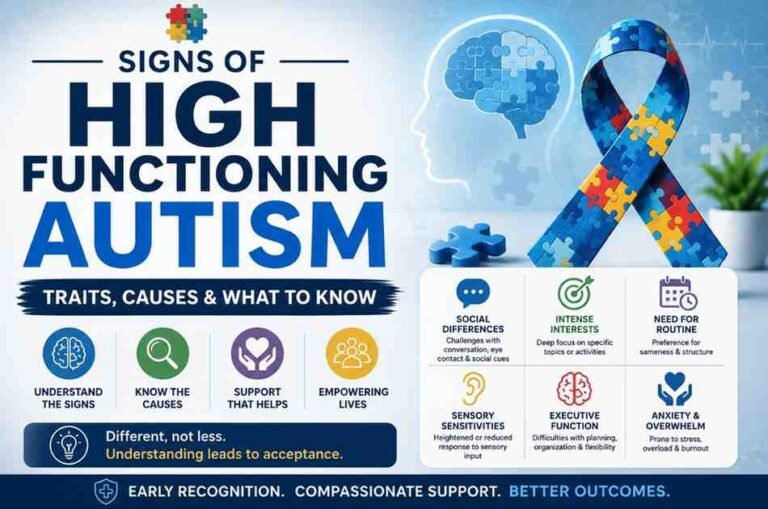
People at this level often manage conversation and daily routines but still struggle with the give and take of social interaction. They may have trouble reading social cues, switching between activities, or organizing tasks independently. This level was previously associated with what many called high-functioning autism, though clinicians now avoid that term because it can understate real difficulties.
Level 2: Requiring Substantial Support
At level 2, social communication problems are noticeable even with support in place. Speech may be limited to simple sentences, and interests or routines are narrower and harder to redirect. Someone at this level typically needs consistent intervention across home, school, and community settings. For a comparison of moderate support needs, see our Level 2 Autism Guide.
Level 3: Requiring Very Substantial Support
Autism spectrum disorder level 3 represents the far end of that scale. Communication is severely limited, initiating social contact almost never happens spontaneously, and behavioral rigidity is pronounced enough to disrupt daily life even with extensive support. According to CDC surveillance data cited by several clinical resources, roughly one in four children diagnosed with autism falls into this highest support category, which is a meaningful share of the overall autism population.
What Does Level 3 Autism Mean for Daily Life?
What’s level 3 autism like on an ordinary day? It varies by person, but certain patterns show up consistently across clinical descriptions. Getting dressed, eating a new food, or switching from one room to another can trigger real distress if the routine is broken. Sensory input that most people filter out automatically- a humming appliance, an itchy tag, fluorescent lighting- can feel overwhelming rather than background noise.
Communication is usually the area families notice first. A person with this level of autism spectrum disorder may rely on single words, gestures, picture cards, or an augmentative communication device rather than spoken conversation. Even when words are present, they may serve a narrow function, such as requesting food, rather than building toward back-and-forth dialogue. Some individuals use echolalia, repeating phrases heard from television or caregivers, without necessarily using those phrases to convey an original thought.
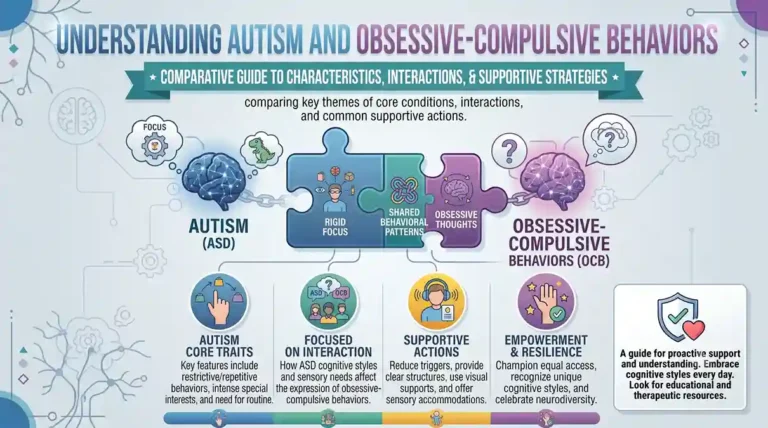
Repetitive behaviors are the second defining feature. These can include hand flapping, rocking, lining up objects, or intensely narrow interests that are difficult to redirect. Insistence on sameness, wanting the same route to school or the same sequence at bedtime, is common, and unexpected changes can lead to meltdowns that are not simply bad behavior but genuine dysregulation.
Level 3 Autism Symptoms
Because clinicians evaluate two separate domains, autism level 3 symptoms are usually grouped the same way: social communication and restricted, repetitive patterns.
Social Communication Symptoms
- Very limited or absent spoken language
- Rarely initiates interaction, even with familiar people
- Minimal or unusual response when approached socially
- Limited use of eye contact, gestures, or facial expression to communicate
- Difficulty understanding or responding to others’ emotional states
Restricted and Repetitive Behavior Symptoms
- Extreme distress when routines or environments change
- Highly fixed rituals that are very difficult to interrupt
- Intense, narrow interests that dominate attention
- Repetitive motor movements such as flapping, spinning, or pacing
- Strong reactions to sensory input, either heightened sensitivity or reduced response
Not every person with level 3 autism shows every symptom on this list, and the intensity of each symptom can shift with age, environment, and intervention. A qualified clinician, not a checklist alone, is needed to confirm a diagnosis.
Level 3 Autism in Toddlers: Early Signs
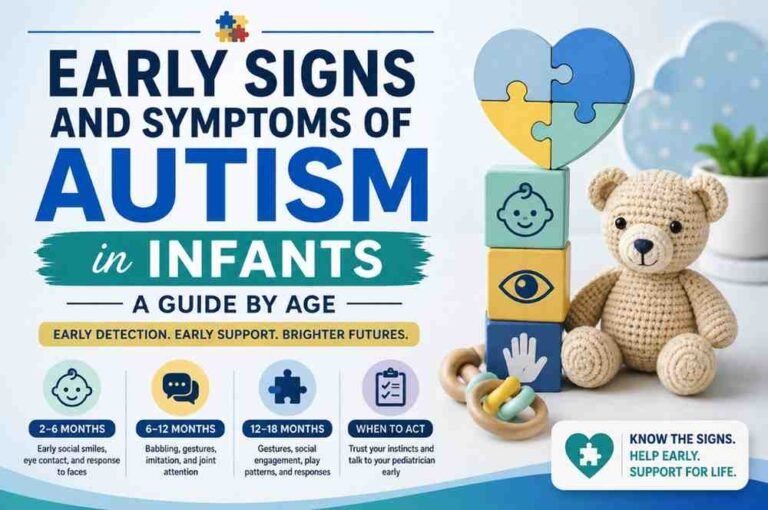
Level 3 autism in toddlers often becomes apparent earlier than milder presentations, because the gap between a child’s development and typical milestones is larger and harder to miss. Parents frequently notice that their toddler is not responding to their name by twelve to eighteen months, is not pointing to show interest in objects, and is not building single words into short phrases by the expected age.
Other early signs include limited eye contact during play, little interest in other children, strong reactions to changes in routine, and repetitive movements such as hand flapping or toe walking. Some toddlers also show unusual play patterns, lining up toys repeatedly rather than using them for pretend play, or becoming fixated on part of an object, like a wheel, rather than the toy as a whole.
It is worth stressing that autism is a developmental condition, not a progressive disease. You may hear the term “stage 3 autism” used informally, but autism does not move through stages the way an illness might. A child’s level of support may be reassessed over time, and early, consistent intervention often changes how much support is needed later, even though it does not remove the underlying diagnosis. To understand why autism develops, read our guide on the causes of autism.
How Level 3 Autism Is Diagnosed
There is no blood test or brain scan that confirms autism spectrum disorder. Diagnosis relies on structured behavioral observation and developmental history, typically gathered by a team that may include a developmental pediatrician, child psychologist, or neurologist. Standardized tools such as the Autism Diagnostic Observation Schedule are commonly used alongside parent interviews and, when relevant, school or daycare observations.
To assign level 3 autism specifically, the evaluating clinician documents severe impairment in both the social communication domain and the restricted, repetitive behavior domain, and confirms that the impairment persists even when support is already available. The evaluation also typically screens for co-occurring conditions, including intellectual disability, epilepsy, gastrointestinal issues, and sleep disturbances, since these are common alongside higher support needs and affect the overall care plan.
Can Level 3 Autism Live Independently?
This is one of the most searched and most emotionally loaded questions parents ask. Can level 3 autism live independently in adulthood? The honest, evidence-based answer is that full independent living without any support is uncommon at this level, but the range of outcomes is wide, and “independence” is not all-or-nothing.
Many adults with level 3 autism live in supported settings, such as group homes, supervised apartments, or with family, combined with vocational programs, day habilitation services, or supported employment. Others achieve more autonomy in specific areas, managing personal care independently, for example, while still needing help with finances, transportation, or medical appointments. Adaptive skill training, occupational therapy, and structured transition planning during the teenage years all influence how much support a person needs as an adult.
It is also worth separating intellectual functioning from autism severity. Level 3 describes support needs related to social communication and repetitive behavior, not intelligence. Some individuals with this level of autism spectrum disorder have average or above-average cognitive ability, which can open paths toward greater independence when combined with the right communication supports.
Level 3 Autism Life Expectancy: What the Research Shows
Level 3 autism life expectancy is a sensitive topic, and the numbers circulating online deserve careful context rather than alarm. Several population studies have found that autistic individuals, on average, have a shorter life expectancy than the general population, with some estimates for those requiring the most support falling in the range of roughly 40 to 60 years, though figures vary between studies and populations.
It is important to understand why this gap exists. Research points to co-occurring medical conditions, including epilepsy, gastrointestinal disorders, and sleep problems, along with elevated rates of accidents, wandering-related injuries, and mental health struggles such as anxiety and depression, as the primary drivers rather than autism itself. Autism spectrum disorder is a neurodevelopmental condition, not a terminal or degenerative illness, and it does not directly cause death.
The practical takeaway for families is that consistent medical care, seizure management when relevant, safety planning around wandering, and attention to mental health can meaningfully affect these outcomes. Life expectancy statistics describe population averages, not a prediction for any individual child, and outcomes continue to improve as awareness, early intervention, and healthcare access expand.
Treatment and Support Options for Level 3 Autism
There is no single treatment that resolves autism spectrum disorder, and claims of a cure should be treated with skepticism. Instead, care for level 3 autism typically combines several evidence-based therapies tailored to the individual.
Applied Behavior Analysis (ABA)
ABA therapy is one of the most widely used interventions, focused on building communication, daily living, and social skills through structured, individualized teaching methods. It is most effective when delivered consistently and adjusted regularly based on the child’s progress.
Speech and Language Therapy
Because communication is often the most affected area, speech therapy plays a central role. This can include traditional articulation work, but for many individuals with this level of autism, it also involves augmentative and alternative communication tools, such as picture exchange systems or speech-generating devices.
Occupational Therapy
Occupational therapy addresses sensory processing difficulties and helps build skills for dressing, eating, and other daily living tasks. Sensory integration strategies can reduce the intensity of meltdowns triggered by overwhelming environments.
Special Education and School-Based Support
In the United States, children with level 3 autism are typically entitled to an Individualized Education Program, or IEP, under federal law. This can include specialized classroom placement, one-on-one aide support, and related services delivered at school, such as speech and occupational therapy.
Family and Caregiver Support
Parent training programs, respite care, and caregiver support groups are not optional extras. They directly affect a family’s capacity to sustain the intensive, long-term support that level 3 autism often requires, and they reduce caregiver burnout, which in turn benefits the child.
Autism Level 3 vs Level 1 and Level 2: Key Differences
Understanding autism level 3 meaning is easier when it is placed next to the other two levels side by side.
| Feature | Level 1 | Level 2 | Level 3 |
|---|---|---|---|
| Support needed | Support | Substantial support | Very substantial support |
| Speech | Full sentences, social difficulty | Simple sentences, limited range | Few words or nonverbal |
| Social initiation | Reduced but present | Rare, unusual approaches | Very limited or absent |
| Behavioral flexibility | Some difficulty with change | Marked difficulty with change | Extreme distress with change |
| Typical daily support | Occasional guidance | Regular, structured support | Continuous, hands-on support |
This comparison reflects general patterns described in the DSM-5 and is not a substitute for individualized clinical evaluation, since presentation varies considerably from person to person.
Frequently Asked Questions
What is level 3 autism?
Level 3 autism is the most intensive of the three DSM-5 severity levels for autism spectrum disorder, describing individuals who need very substantial support because of severe social communication challenges and highly restricted, repetitive behaviors.
What is the difference between the 3 levels of autism?
The three levels of autism spectrum disorder differ by how much support a person needs day to day. Level 1 requires support, level 2 requires substantial support, and level 3 requires very substantial support, based on the severity of social communication and behavioral symptoms.
Can someone with level 3 autism talk?
Some can. Communication ranges widely, from being completely nonverbal to using single words or short functional phrases. Many rely on alternative communication methods, such as picture cards or speech-generating devices, alongside or instead of spoken language.
Is level 3 autism the same as severe autism?
Level 3 autism spectrum disorder is often described informally as severe autism, since it represents the highest support category in the DSM-5. Clinicians increasingly prefer “very substantial support needs” over the word “severe,” since it centers the type of help required rather than a judgment about the person.
Does level 3 autism get better with therapy?
Support needs can decrease with consistent, early, and individualized therapy, particularly in communication and adaptive skills. Autism itself remains a lifelong developmental condition, but functioning and quality of life often improve significantly with the right combination of interventions.
Final Thoughts
Level 3 autism describes a real and often demanding set of challenges, but the diagnosis is a starting point for support, not a fixed prediction of your child’s future. Communication, independence, and quality of life can all improve with early intervention, consistent therapy, and a care team that treats your child as an individual rather than a category. If you suspect your toddler shows signs of level 3 autism, or you are navigating a recent diagnosis, a developmental pediatrician or autism specialist is the right next step for an individualized evaluation and support plan.